
Château Roc Meynard
château roc meynard
A fifth-generation estate in Fronsac, now led by Esther Hermouet
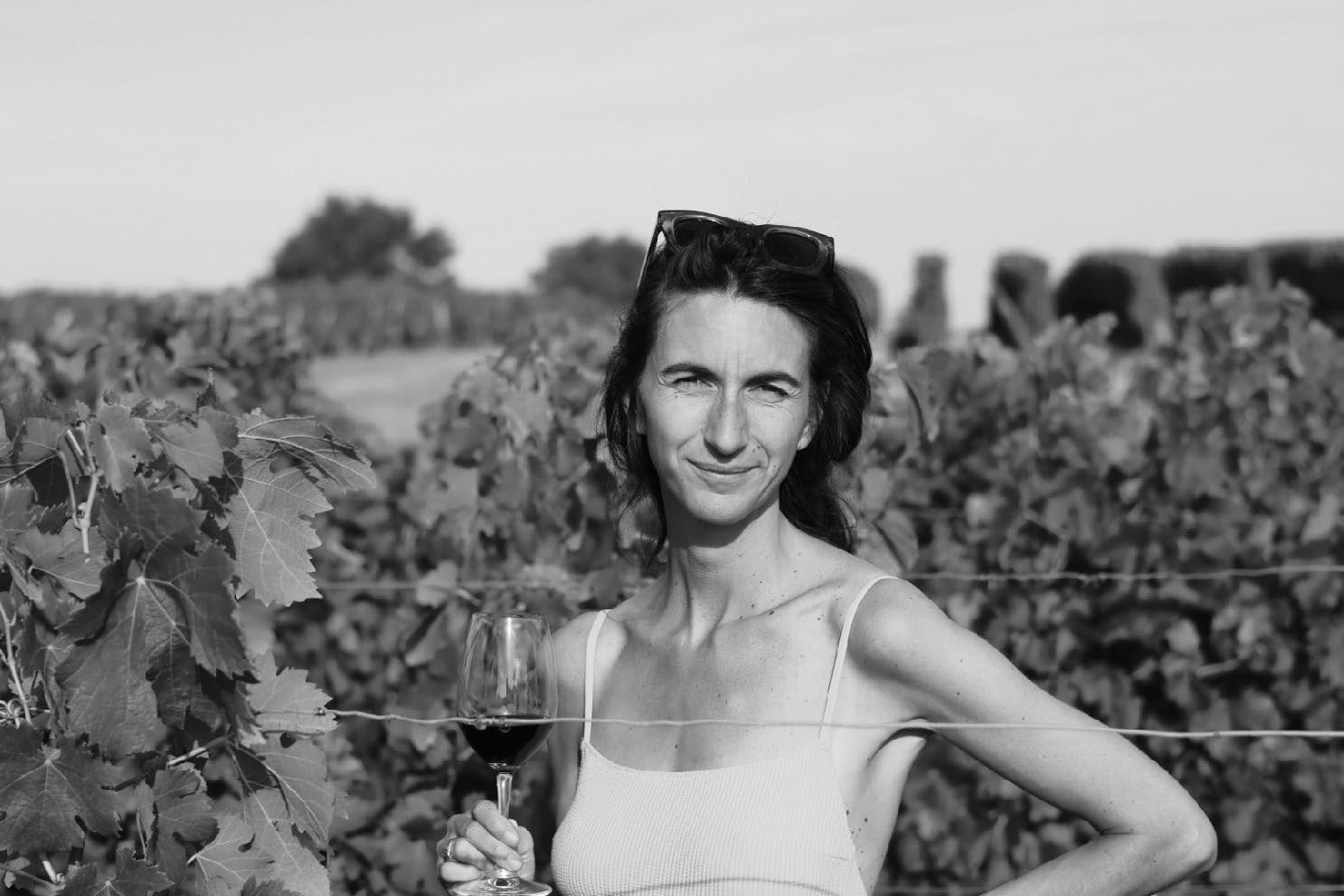
Owner/Winemaker, Esther Hermouet
The Meynard land appears on maps from 1785. Vines have been there ever since — through ownership changes, severe frosts in the 1970s, rebuilds, and five generations of families. The estate passed to Philippe Hermouet in 1987, and in 2024, to his daughter Esther.
Esther didn't take a direct path back. She left Fronsac at 18, studied business in Paris and Lille, and spent years in strategic marketing roles at Moët Hennessy, Campari, and Champagne Lallier. She worked with global markets and New World producers, absorbed different approaches to viticulture and communication, and came home with a much wider frame of reference than someone who had never left.
Her return wasn't a retreat. It was a decision. She describes her project as a new chapter of the Roc Meynard story, not a new book — and that distinction matters. She's not dismantling what her father built. She's extending it, with her own technical training, her own vision, and the clearer eyes that come from having worked outside it for a decade.
She now runs the estate alongside a six-person team that includes winemaker and viticulture lead Mélodie Blanc and consulting oenologist Bruno Lacoste. Philippe Hermouet remains involved. The transition is deliberate and gradual, which reflects how Esther thinks about most things at the estate.
FARMING AND WINEMAKING
Roc Meynard spans about 50 hectares across two appellations — 26 in Bordeaux, 22 in Fronsac — with vineyards arranged across a series of hillside plateaus. The layout makes close observation practical, which is how the estate operates. There is no uniform formula applied across the property. Each plot gets individual attention, and decisions from harvest to bottling follow from tasting and watching, not a fixed protocol.
Sustainable farming has been standard here since the early 1990s, when natural grass cover was introduced under vine. Nearly 15 hectares of the estate are dedicated biodiversity zones — woods, hedgerows, green corridors, pastures — supporting 21 documented species of native orchids, bird habitat including the Orpheus warbler, and a mixed woodland of pine, juniper, and truffle oak. The estate holds HVE (High Environmental Value) and ISO 14001 certifications.
Esther summarizes the approach plainly: "We address the estate as a farm, recreating virtuous circles between culture and nature."
In the cellar, the guiding principle is precision. Her stated philosophy — "precision brings reliability, and timelessness echoes contemporaneity" — isn't just a tagline. It shows up in how she talks about the work: careful, specific, and grounded in observation rather than trend.
VINEYARD
White Varietal Block — Roc Meynard Estate, Bordeaux
2.5 hectares of Sauvignon Blanc and Sémillon on a 70-meter clay-limestone hillside at the center of the estate, facing east-west for even light exposure. The block sits within a 28-hectare single parcel, surrounded by 15 hectares of natural green corridors — woods, hedgerows, and pasture that the estate manages as part of its broader approach to soil health and ecological balance.
Sauvignon Blanc and Sémillon connect back to the estate's own history in white wine, which Esther has been deliberately working to restore.
PRODUCT DETAILS
Region: Bordeaux
Vintage: 2023
Varietals: 50% Sauvignon Blanc, 50% Semillon
Terroir: Clay-limestone hillside vineyard
Farming: Sustainable
Winemaking:
Brief cold soak before pressing
Fermented 10 days in stainless steel
Aged 4 months in stainless steel
ADDITIONAL DETAILS
Winemaker: Esther Hermouet
⬇ TECH SHEET