
Château Pas de l'Âne
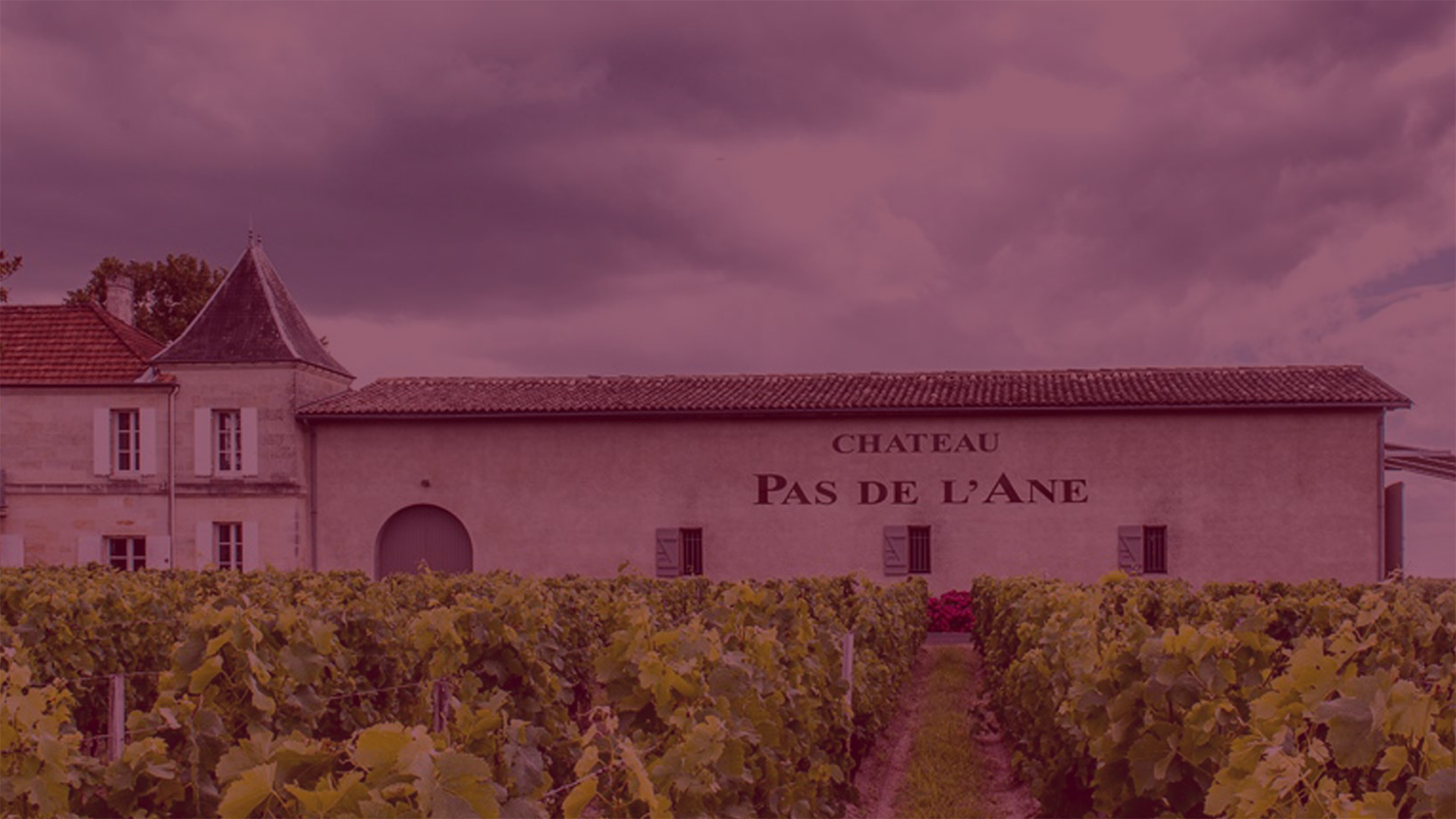
château pas de l'âne
A young estate on one of Saint-Émilion's most storied hillsides — planted between Cheval Blanc and Figeac, farming five of the eight appellation villages.
Nicolas Baptiste founded Château Pas de l'Âne in 1999 on a single hectare. The name — "donkey's step" — is a nod to the stubborn incrementalism that has defined the estate ever since. From that one hectare, Baptiste spent the next decade acquiring parcels wherever they became available across the Saint-Émilion Grand Cru appellation. By 2006, the estate had absorbed the former Château Cros-Figeac, also known as Château Cros-Saint-Emilion, and the expansion hasn't stopped since.
The estate now covers 13 hectares across five of the eight Saint-Émilion appellation villages — gravelly, ferrous-sand, clay-limestone, and iron-rich plateau soils. Baptiste farms each parcel separately and vinifies accordingly.
The vineyard borders both Cheval Blanc and Figeac on the upper plateau. Baptiste started with one hectare in 1999 and spent the next decade acquiring whatever became available within the appellation, including the former Château Cros-Figeac in 2006. Thirteen hectares, built parcel by parcel over more than a decade.
FARMING AND WINEMAKING
Pas de l'Âne holds HVE Level 3 certification — France's High Environmental Value designation, the highest tier in that framework. The vineyards are managed without herbicides; all floor work is done by hand. Pruning follows single or double Guyot depending on each vine's vigor, and the season involves debudding, suckering, manual leaf removal, green harvesting, and vine-side sorting before anything reaches the cellar. Average vine age across the estate is 35 years.
In the cellar, grapes undergo 3 to 5 days of cold pre-fermentation maceration below 50°F before alcoholic fermentation. Extended maceration follows. Malolactic fermentation and aging both happen in 100% new Allier oak barrels — Seguin Moreau and Quintessence cooperages — for 15 months in a humidity-controlled cellar.
VINEYARDS
The parcels supplying the Saint-Émilion Grand Cru are in Saint-Étienne de Lisse, one of the five villages within the estate's holdings. The first parcel — 1 hectare at 70 meters elevation — is clayey sand over iron-rich soils. The second — 2.2 hectares at 90 meters — sits on clayey sand over the limestone bedrock characteristic of the Saint-Émilion plateau. Together, they account for the blend's structural range: the iron and sand of the lower block, the limestone tension of the upper block.
Château Pas de l'Âne is available through K&N Wine Company. Contact us for wholesale pricing and availability.

PRODUCT DETAILS
Region: Bordeaux Saint-Émilion Grand Cru AOC
Vintage: 2019
Varietals: 60% Merlot, 40% Cabernet Franc
Terroir: 50-year-old vines on the iron-rich upper plateau between Château Cheval Blanc and Château Figeac
Farming: Sustainable
Winemaking: Aged 12 months in new French oak
Accolades: 95 points Wine Enthusiast Cellar Selection
⬇ TECH SHEET